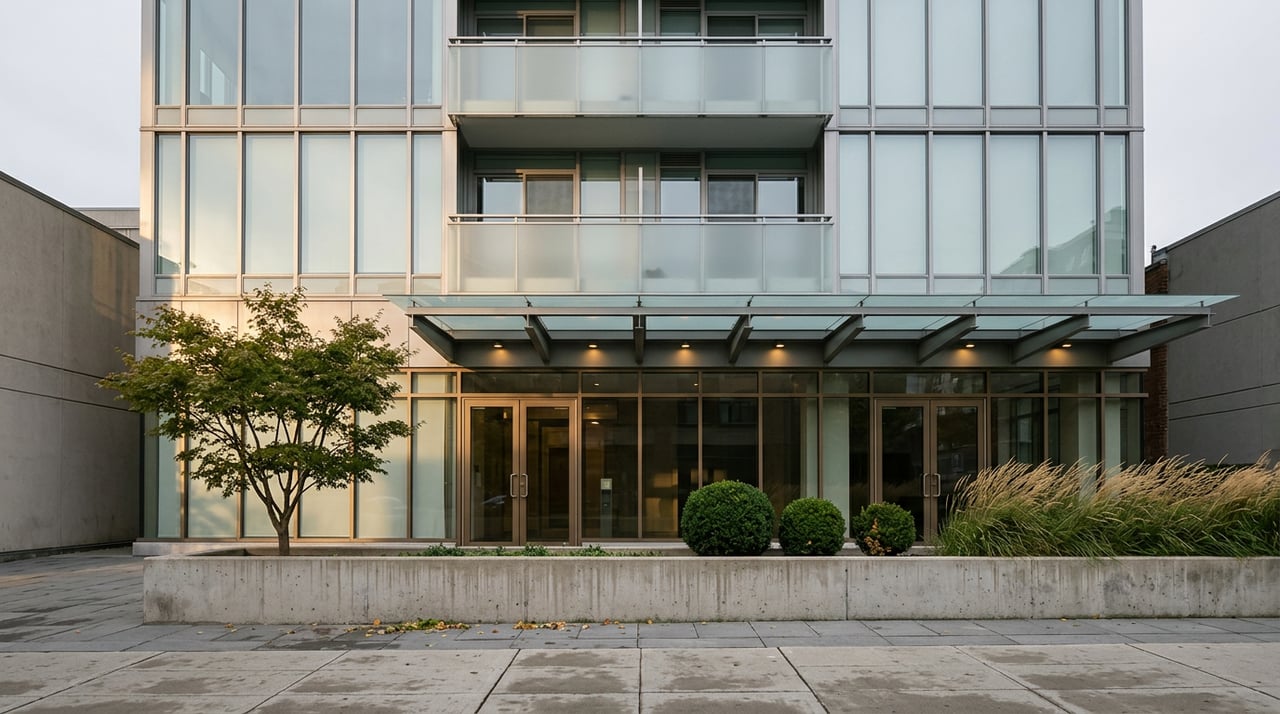
The Belltown Condo Story the Median Price Doesn't Tell
September 10, 2026
September 10, 2026
In April, the median condo sale price in Downtown and Belltown jumped 17.1% year over year. Two months later, in June, it dropped 15.6%. Same neighborhood. Same MLS category. A swing of more than 30 points in ten weeks.
Neither number was wrong. Both were describing an aggregate too small and too mixed to mean much on its own, a handful of luxury closings pulling the midpoint one direction one month and a run of smaller units pulling it back the next. If you're comparing Belltown against Kirkland or Queen Anne using that headline figure, you're comparing noise.
Here's what isn't noise: as of January 1, 2026, a change in Washington law means every Belltown condo resale now has to show you something it didn't have to show you a year ago, and that something predicts your actual cost of ownership far better than any neighborhood median does.
For years, Washington required reserve studies for condos formed after July 2018 under the newer Uniform Common Interest Ownership Act, but buildings formed earlier under the old Condominium Act could skip the requirement entirely unless they chose to opt in. Given that Belltown's condo stock is decades deep, that exemption covered a lot of buildings.
ESSB 5129, signed into law in April 2025, closed that gap. Its cross-applicability provisions took effect January 1, 2026, extending the reserve study mandate under RCW 64.90.545 to every common interest community in the state, regardless of when it was formed. There's no grandfather clause left.
The practical result: a building that has spent twenty years without ever being required to document its roof, elevator, or garage replacement timeline now has to produce that documentation, and disclose it to anyone buying in.
This matters more in Belltown than almost anywhere else in Seattle because of how wide the building-age range actually is. The neighborhood holds boutique pre-war conversions alongside mid-rises from the 1990s and glass towers finished as recently as 2018. A single ZIP code contains a construction timeline spanning more than a century.
Take Cristalla, a 23-story, 195-unit high-rise at 2033 2nd Avenue, completed in 2005. Its monthly HOA dues run from roughly $700 to $1,600 depending on unit size, a range wide enough that two buyers touring the same building can be underwriting very different monthly obligations before they've even discussed the purchase price. A building like that is now twenty-one years into its mechanical life, old enough that major systems, elevators, roofing membranes, garage waterproofing, start entering replacement windows regardless of how well maintained they've been.
Compare that to a tower finished in the last several years, still inside most manufacturer warranty periods on big-ticket systems. The reserve math for the two buildings looks nothing alike, even if their list prices land in the same range this month.
The neighborhood median averages these two realities into a single number. The new disclosure law lets you stop averaging and start comparing.
Under RCW 64.90.640, Washington's resale certificate now runs through 26 mandatory disclosure items, one of the most complete buyer disclosure packages of any state. The association has 10 days from a seller's written request to produce it, and the fee is capped at $275 for the initial certificate, $100 for an update.
Buried in those 26 items is the one that matters most here: if the building doesn't have a current reserve study, the certificate has to say so, in language the statute spells out directly, warning that insufficient reserves may require the buyer to pay a special assessment on demand.
That single disclosure line didn't reliably exist for pre-2018 Belltown buildings before this year. Now it does, on every resale certificate, for every building, no exceptions.
If the certificate lands within 5 days of your contract signing, Washington law also gives you a 5-day right to cancel, one that can't be shortened by the purchase agreement. That window exists specifically so a buyer can read the reserve numbers before they're financially committed, not after.
A reserve shortfall doesn't stay theoretical for long. Say a 40-unit building needs $400,000 for a roof replacement and has $200,000 sitting in reserves. The $200,000 gap gets divided across owners by their percentage interest, typically landing around $5,000 per unit for a building where ownership shares are roughly equal.
That's a routine example. Late last year, Seattle condo owners in at least one building were voting on an assessment closer to $13 million total for siding and structural balcony repair, working out to roughly $50,000 per unit. The difference between those two outcomes isn't luck. It's whether the building had been funding its reserves against a real study or coasting on dues set to feel comfortable rather than adequate.
That's the number a well-run building protects you from, and it's the number the new disclosure requirement is designed to surface before you sign rather than after you own.
Belltown's supply picture backs this up in its own way. Downtown and Belltown condo inventory sat at 8.5 months of supply in April 2026, climbed to 8.7 months in June, then eased to 6.7 months in July, moving the area from a clear buyer's market toward something closer to balanced. Meanwhile the median sale price swung from a 17.1% year-over-year gain to a 15.6% year-over-year drop across that same stretch.
Supply easing and price swinging in opposite directions in the same few months tells you the price figure is being driven by which units happened to close, not by any real shift in what buildings are worth. A few luxury closings in April, a run of smaller units in June. The underlying leverage buyers actually have hasn't moved nearly as much as the median suggests.
What has changed is which building you're buying into, and now you can see it before you write the offer.
If you're weighing two Belltown buildings against each other, the neighborhood-level supply and price data are a starting point, not a verdict. Before you get attached to a unit, ask for:
A building with a thin reserve fund isn't automatically a building to avoid. It's a building where the disclosed shortfall becomes a negotiating point, whether that means a price adjustment, a seller credit toward the anticipated assessment, or simply going in with eyes open about what your first few years of ownership will actually cost.
The median price gets you in the door. The reserve study tells you what happens after you're inside.
If you're comparing Belltown towers and want a second set of eyes on a specific building's reserve study before you write an offer, Chris Bierrum can walk through it with you. Schedule a consultation.
Stay up to date on the latest real estate trends.

I offer the highest level of expertise, service, and integrity. Connect now to get started today.
Get in Touch with Me to Learn More
ADDRESS 1400 112th Ave SE Ste 100 Bellevue WA 98004